
Type-safe API
- End-to-end request types
- Typed API responses
- Compile-time error checks



Search the packs, templates, docs, and pages
Your agent reads the conventions before it writes, then builds the way a senior team would. When it drifts, lint and the compiler catch it in seconds.
The conventions are written
How this codebase handles errors, where features live, what gets tested: 40+ rules ship in the repo, covering all six apps.
The agent reads them first
Cursor, Claude Code, Codex and Copilot load the rules before writing, so the first draft matches the house style.
Gates catch the rest
Anything that drifts fails oxlint or pnpm typecheck in seconds, and the agent corrects itself.
without rules
"Don't put the logic in the route handler. And no try/catch..." Twice a day, forever.
with rules
You never have that conversation. It was already in the file.
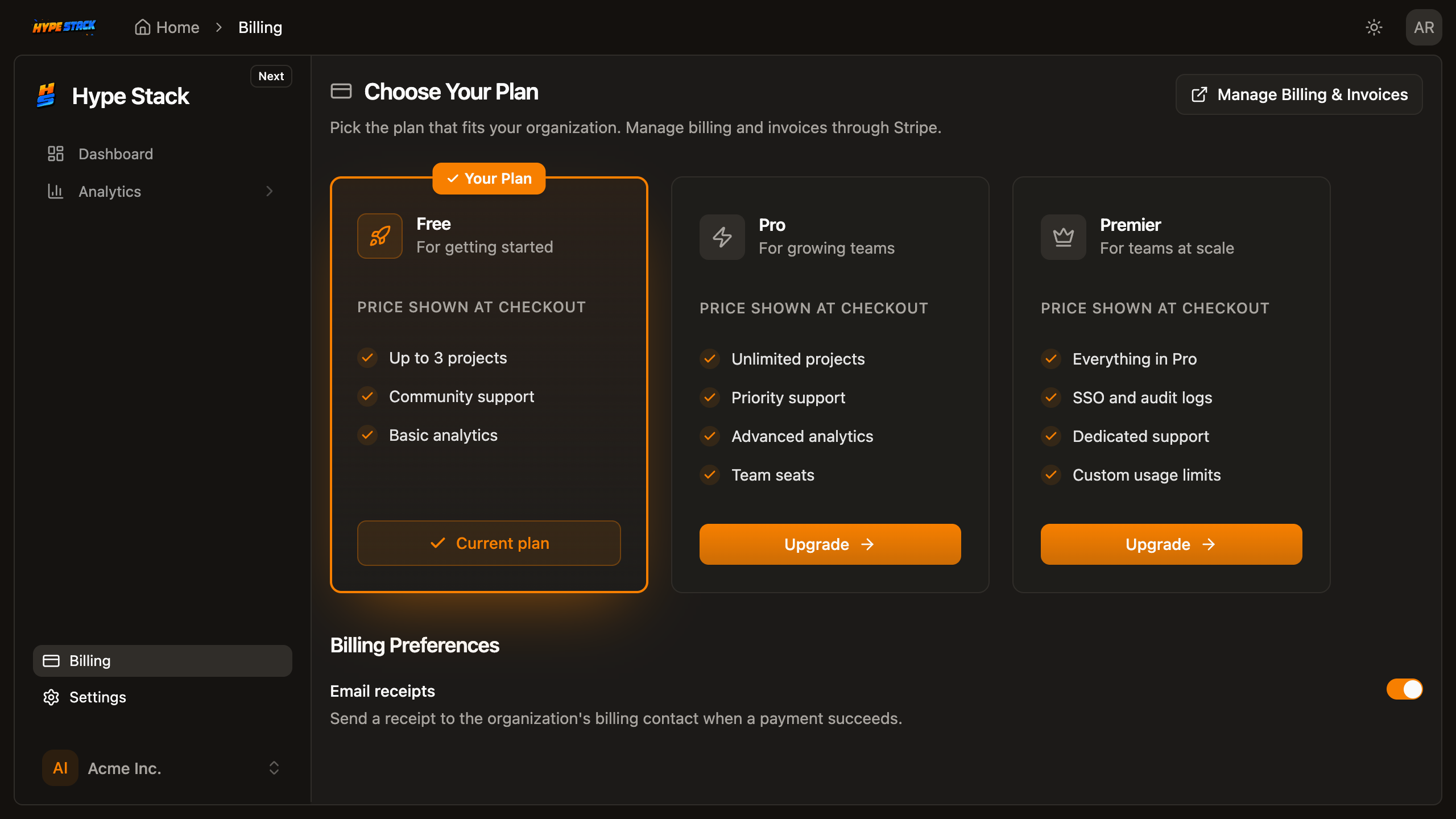
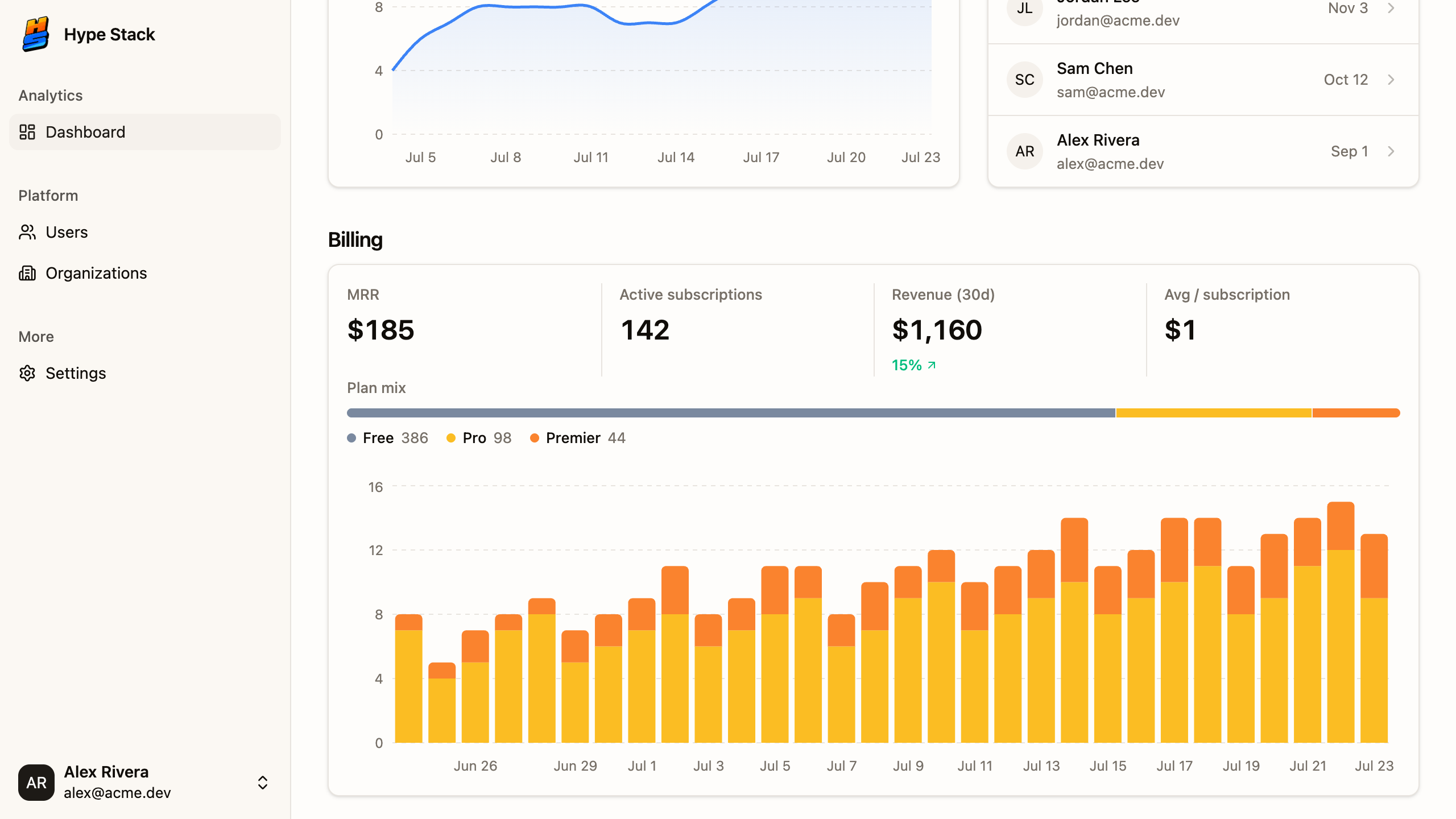
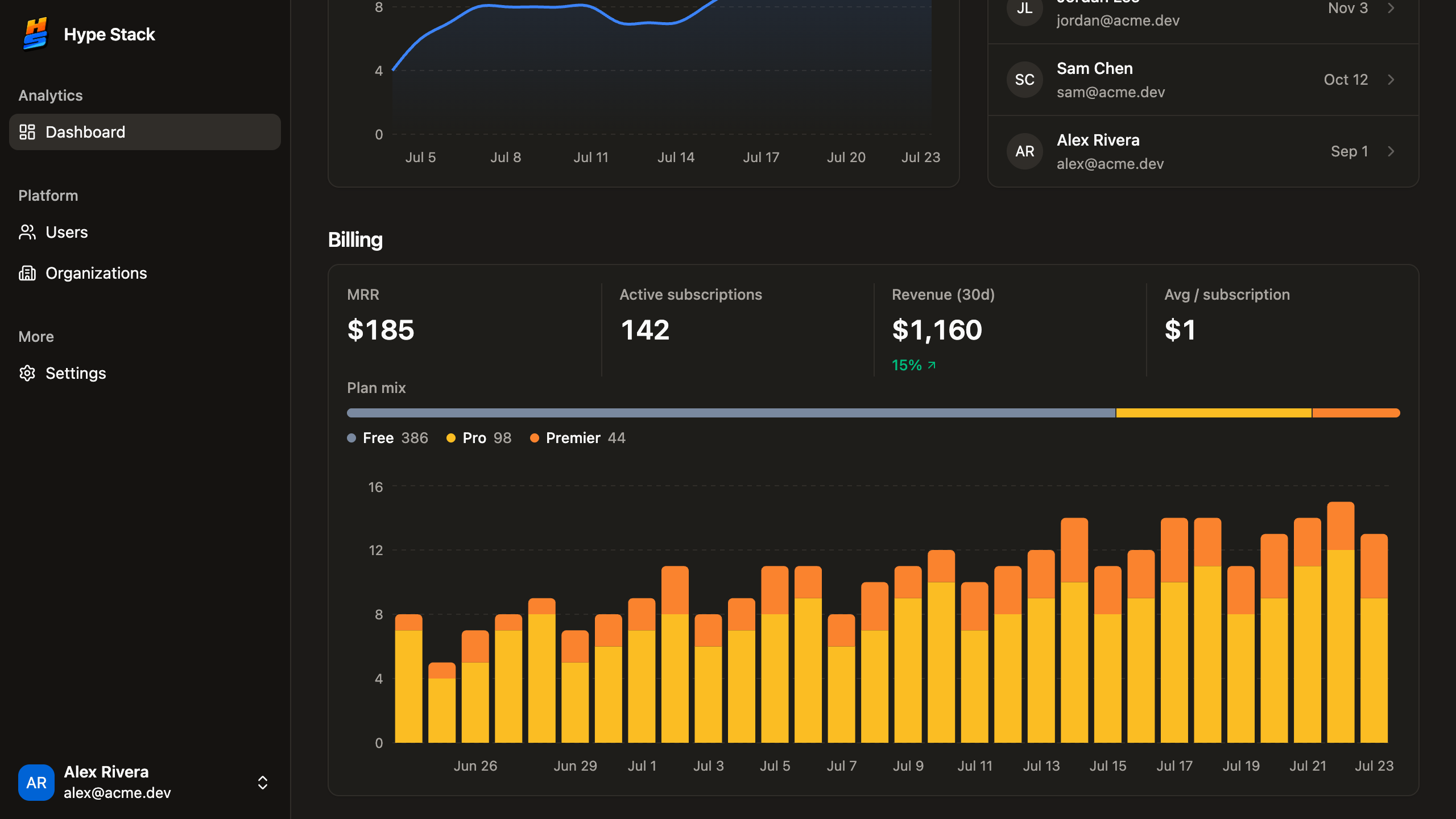
Real captures, not mockups. Billing installs finished from the Stripe pack, and the admin panel updates with it. Your agent never has to invent webhook retry logic, so there is nothing for it to silently get wrong.
you
Add billing with plans and a checkout.
Done. Typecheck clean.

you
Add billing with plans and a checkout.
Done. Typecheck clean.
The toolkit makes the agent the senior engineer on your team, so your focus goes where it should: the product, the direction, and what you need to succeed.
Describe the product, not the architecture
Say what should exist, in plain language. The agent already knows how this codebase does screens, data, and permissions.
The senior habits come pre-installed
25 rules and skills ship with the project and the agent reads them before writing, so it works like someone who has been on the team for years.
Wrong turns are caught for you, in seconds
Lint and the compiler check every change automatically. A bad guess cannot ship, whether or not you would have spotted it yourself.
Your attention stays on the business
Pricing, users, the next feature, the direction. The technical part is the agent's job, and this is the equipment it does it with.
.claude/rules/
backend-errors.md
testing-workflow.md
theming.md
Shipped with the project, in the folder each editor already looks in.
Files land where the team puts them, tests included.
Anything that drifts fails in seconds, and the agent fixes it.
3x
Fewer retries before a change lands
The agent reads the conventions instead of guessing at them.
25
Rules and skills it studies before writing
Rules and lint live in the public template, the skills land fresh from skills.sh at create time.
0
Conventions left to argue about in review
Breaking one fails the build in seconds, so drift never ships.
✓ lint✓ typecheck✓ tests
One ruleset, read by every tool. Feedback lands in seconds, so a retry costs your agent seconds instead of costing you a review.
Pick every editor your team uses. The rules convert at create time, one set each.
Cursor
.cursor/rules
T3 Code
AGENTS.md
Claude Code
.claude/rules
Copilot
.github/instructions
Save, and the answer is back before the agent moves on.
Types that catch wrong guesses, tests that gate every change, and rules the agent reads before it writes.


Every pack ships real source code: frontend, backend, and admin surfaces where the feature needs them. Add them when you need them, one command each.
Scaffold a project, pick your editor, and the rules land where that tool looks for them.
13 rules / 4 lint rules / 8 skills