

The fastest way to start an app in 2026 is a typed full-stack template plus a CLI that composes auth, billing, and notifications into it. You own the code. Here is how it works.
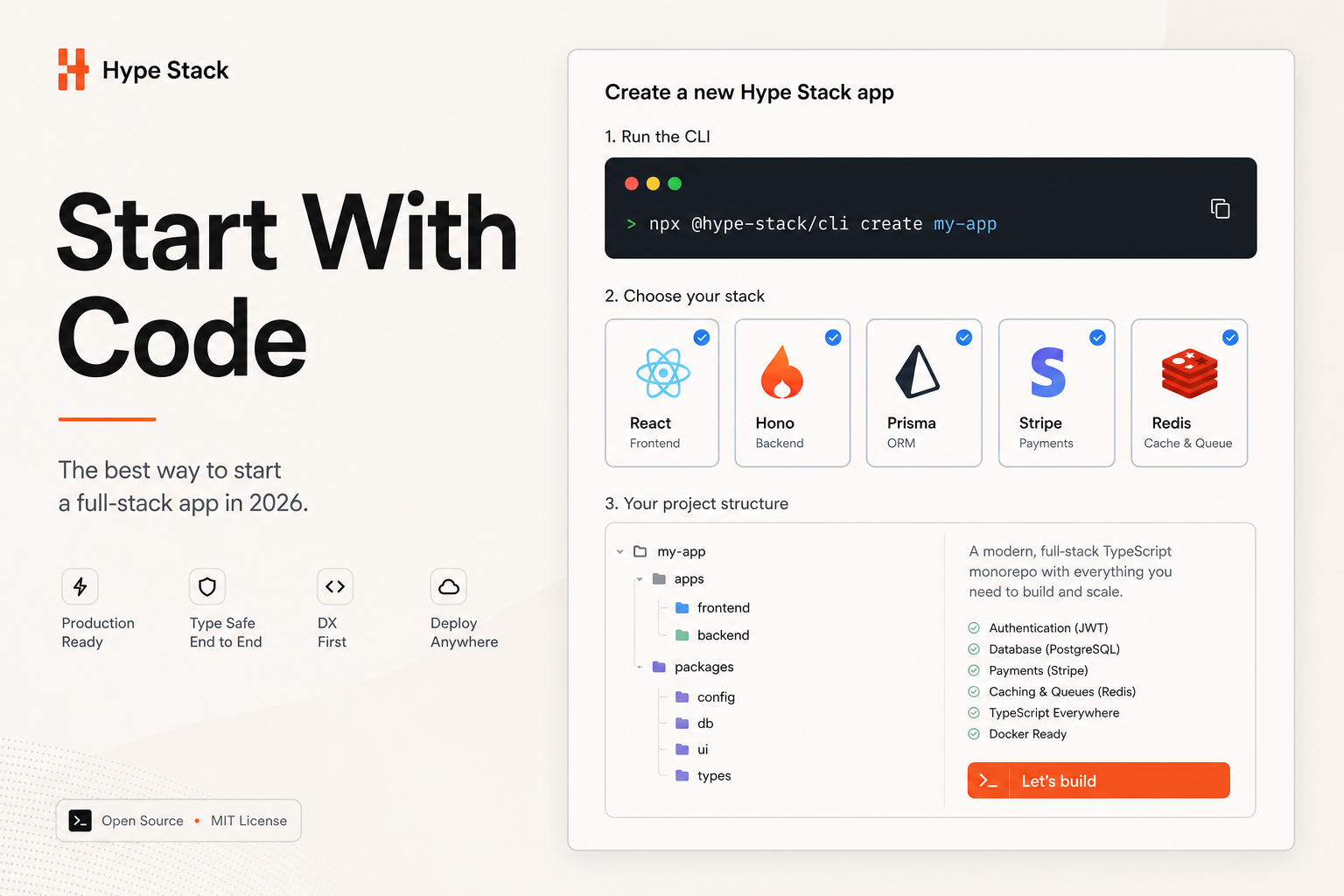
If you are starting an app in 2026, the best path is not a blank folder and a weekend of wiring. It is a typed full-stack template plus a CLI that drops the features you need into it. You pick the stack, you pick the features, and you own every line of the result. This is how Hype Stack is built to be used, and it is the shortest route from empty directory to running app I have found.
Why starting from scratch lost
The boring parts of a SaaS app have not gotten more interesting. Auth, billing, sessions, organizations, notifications, a database schema, a router, a layout. You will write them, or you will paste them, or you will depend on a black box that ships them. The first two cost days. The third costs control.
In 2026 the cost of a blank repo is not just time. It is the cost of every decision you defer. You pick an auth provider later. You bolt billing on when someone asks to pay. You add a layout when the app finally has a second screen. Each of those is a migration done under pressure, and migrations done under pressure are where bugs live.
A template inverts that. The decisions are made, documented, and tested. You start with a working app and subtract what you do not need, instead of starting with nothing and building toward an app.
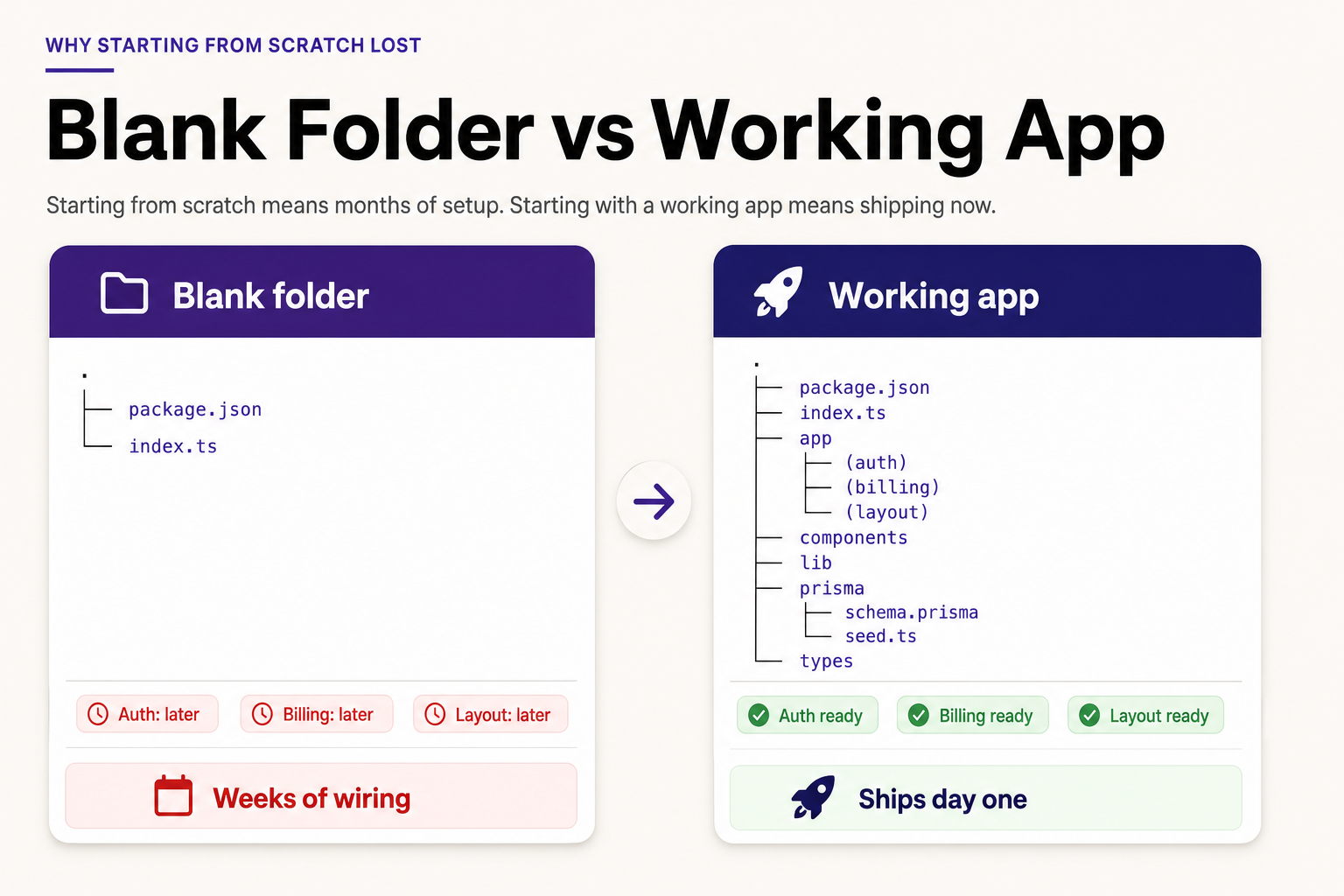 The blank folder defers every decision. The template ships them made, so you start from a working app.
What a starter template actually saves you
The Hype Stack template ships emptied of features on purpose. It is a real React 19 frontend, a real Hono backend, Prisma and Kysely over Postgres, Redis for cache, and a layout. It builds, it typechecks, it has CI. What it does not have is an opinion about which auth provider you use or whether you charge money yet.
That is the point. You get the structure and the tooling for free, and you add features as packs. The starter pack is the one feature you must pick, because everything else bills a user or belongs to an organization that the starter provides.
The CLI: create, then compose
Two commands do the work.
npx @hype-stack/cli create my-appThat clones the template, installs dependencies, and hands you a running app. Then:
npx @hype-stack/cli composeThe compose command opens a picker. You choose a starter, a layout, and the feature packs you want. The CLI resolves
dependencies, validates licenses, copies the pack source into your repo, runs codemods, merges the Prisma schema, and
updates stack.json. When it finishes, the features are in your code, not in a node_modules folder you cannot edit.
This is the part that matters for a starting point. The packs are source you own. You read them, you change them, you delete the parts you do not want. There is no version lock-in and no upgrade treadmill, because there is no package to upgrade.
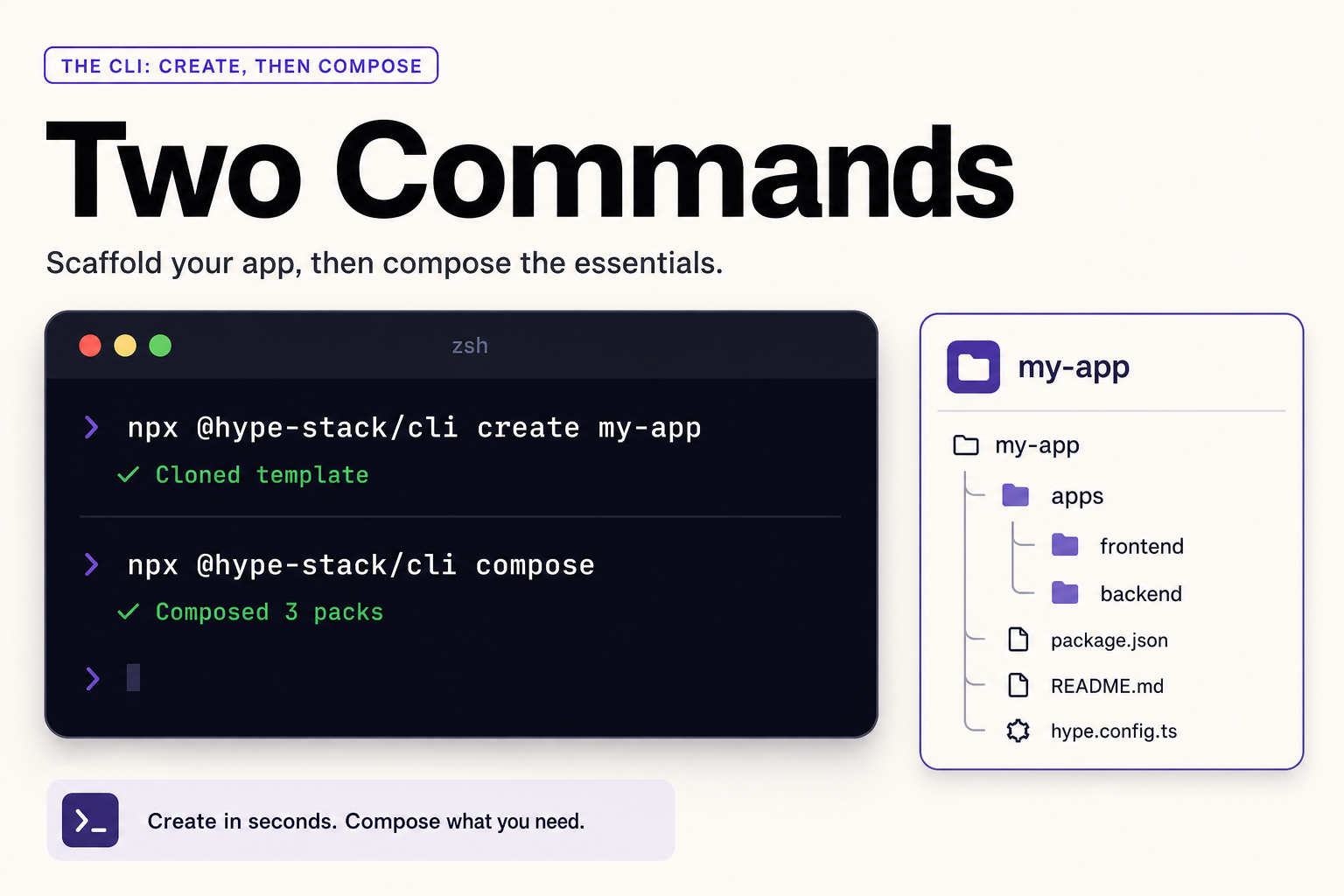 Two commands:
 create clones the template, compose drops in the packs. You end up with a real project tree.
What you own vs what you depend on
You depend on the real libraries: React, Hono, Prisma, Stripe, WorkOS. You own the code that wires them together. That line is what makes the template safe to ship on.
A feature pack is not a dependency. It is a one-time copy of working code. When Stripe ships a breaking change, you update the library and you read the diff in your own files, because the integration lives in your repo. When you rename a model, you rename it in code you control. Nothing reaches into a package you cannot see.
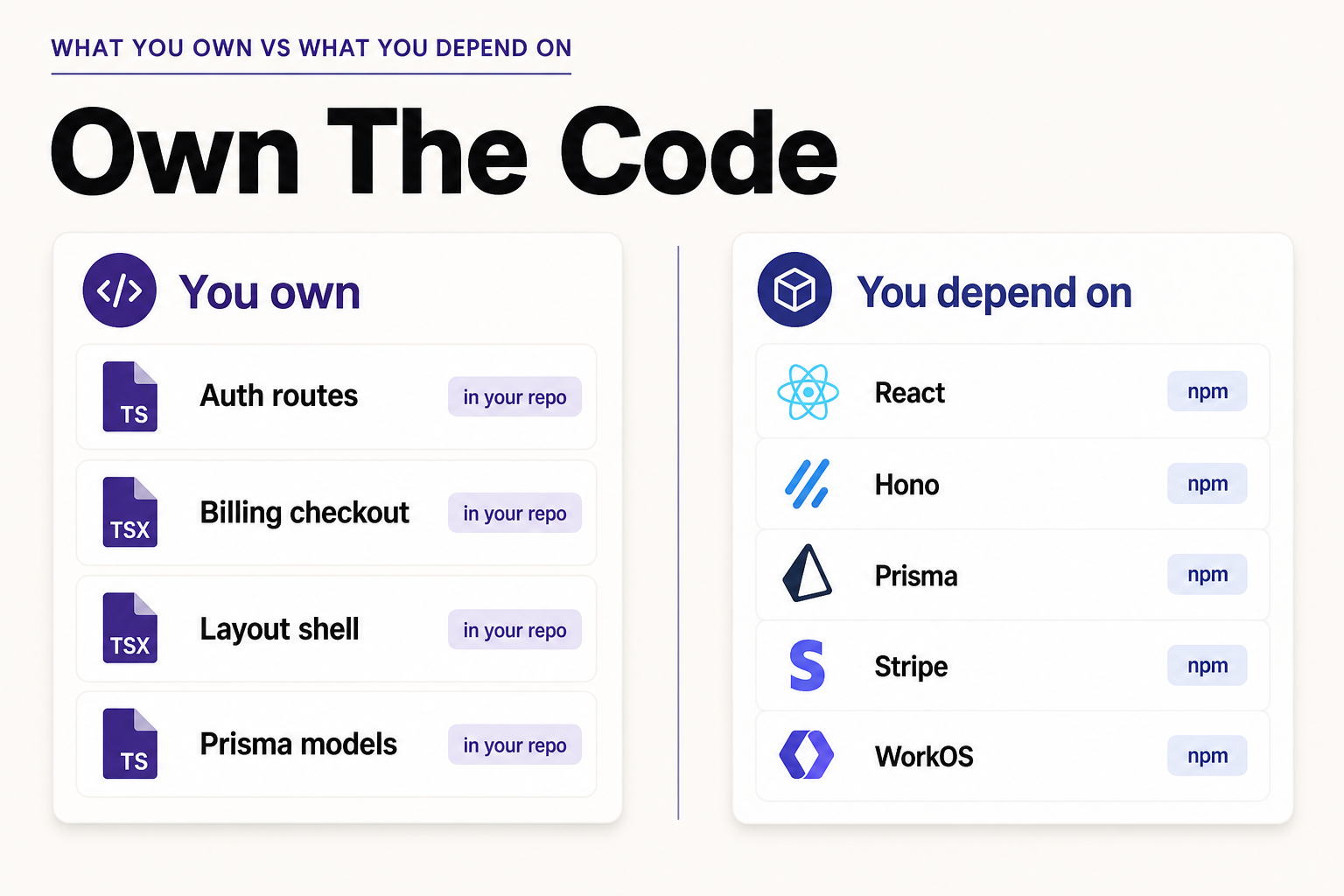 You depend on the libraries. You own the wiring: auth routes, checkout, layout, and models all live in your repo.
The realistic first hour
Run create. Run compose and pick a starter, a layout, and billing if you plan to charge. Set your env, run Prisma,
and boot the dev servers. You now have an app with auth, a real layout, and a checkout route, and the clock has not
moved past an hour.
The rest of the day goes to the parts only you can write: your pricing, your copy, the one feature that is the reason the app exists. The infrastructure is done, and it is done in a way you can read and change.
When to stop reading and run the command
If the goal is a SaaS app, the best way to start it in 2026 is to start it from a base that already works and add to it with a CLI. You skip the week of boilerplate, you keep the code, and you spend your time on the thing that makes your app yours.
Run npx @hype-stack/cli create, then compose, and you are looking at a real app instead of an empty folder. The
docs walk through each step, and the packs page lists every feature you can compose in.